
World Cup vs Olympics: The Two Biggest Sporting Events
 by Richard Janvrin,
January 01, 2026
by Richard Janvrin,
January 01, 2026
It’s rare for sporting events to captivate the entire world, but the Olympics and World Cup both do just that as teams and participants around the globe compete.
While other sports and championships like the Super Bowl, Wimbledon, and even the Tour de France draw a global audience, they can’t capture what the Olympics and the World Cup can.
But what about in comparison to one another?
Below, I’ll explore the World Cup vs Olympics and see which event is bigger today.
- World Cup vs Olympics Viewership and Reach
- Olympics vs World Cup: Participation and Scope
- Economic Impact and Broadcasting
- Media Reach and Fan Engagement
- Is the World Cup Bigger than the Olympics?
World Cup vs Olympics Viewership and Reach
One key metric to help us answer the question “Is the World Cup bigger than the Olympics?” is viewership.
In the world of streaming and social media, it can sometimes be difficult to know exactly how many people watched.
The most recent event we need to examine in the discussion of World Cup vs Olympics viewership is the 2024 Summer Games in Paris.
Here’s what the International Olympic Committee had to say about the viewership:
“A record 84 per cent of the potential global audience* followed the Olympic Games Paris 2024, according to independent research conducted on behalf of the International Olympic Committee (IOC). This equals around five billion people and means that more than half of the world’s population followed the inspirational achievements of the Olympic athletes and the magic of the Olympic Games, underlining the massive success of the Games in Paris.”
You’ll notice the asterisk and the disclaimer for this is: “Potential global audience with access to follow the Olympic Games and over the age of 4 years old.”
As for the 2022 Winter Olympics in Beijing, the IOC reported that it reached a global audience of more than two billion. This figure is far more concrete, as the 2.01 billion came from linear TV and digital platforms.
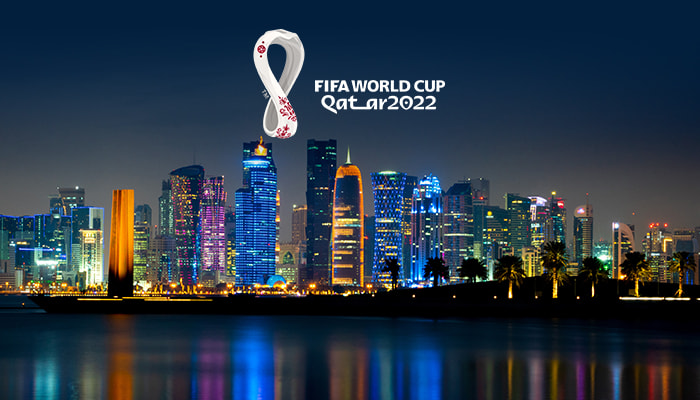
As for the 2022 World Cup in Qatar, here’s the data we have, according to FIFA:
- Total media engagement: 5 billion
- Linear TV: 2.9 billion
- Digital/Streaming: 2.7 billion
- Social Media – 2.2 billion
- FIFA Platforms: 211.8 million unique users.
So, combining linear and digital/streaming, that’s 5.6 billion viewers who watched some portion of the World Cup. The World Cup Final between Argentina and France drew 1.42 billion viewers, the most ever for a World Cup Final.
Overall, based on this data, the World Cup has had more viewers. The data for the 2024 Olympics seems a bit skewed, and there’s no actual linear TV data.
Olympics vs World Cup: Participation and Scope
While the World Cup may have the upper hand in viewership, one of the biggest differences between the World Cup and the Olympics is the overall participation, which the Olympics crushes.
There are thousands of athletes across numerous sports. There were 329 medals awarded at the 2024 Summer Olympics in Paris. The United States led the way with 126, including 40 gold, 44 silver, and 42 bronze.
There were 32 sports in all and 10,714 athletes from 204 teams.
As for the World Cup, there are 32 national teams, each with 26 players.
Thus, the Olympics attract far more participation, which was to be expected. That said, in a comparison of the Olympics vs World Cup, give a +1 to the Olympics for this category.
Economic Impact and Broadcasting
With events at the scale of the Olympics and the World Cup, the economics and broadcasting rights are unlike anything else.
For example, the 2022 World Cup in Qatar resulted in $229 billion in infrastructure upgrades. As for the 2024 Paris Olympics, they spent about €9 billion. The 2020 Tokyo Games cost about $13 billion.
As for revenue, FIFA generated $3.43 billion from TV rights sales from 2019 to 2022. That was about 45% of their revenue.
As for the Olympics, NBC agreed to pay about $7.75 billion for Olympic broadcasting rights from 2021 to 2032. That was in the United States alone.
So, FIFA gets about $857.5 million per year, and the Olympics get about $645 million per year from NBC over the lifetime of that deal.
Both events secure massive broadcast deals and spend billions to make their areas logistically viable, along with building facilities for athletes and spectators to stay and support the event.
Media Reach and Fan Engagement
As discussed a bit above in the World Cup vs Olympics viewership section, there are other ways for fans to engage with the World Cup and the Olympics.
The FIFA World Cup Qatar 2022 generated significant impressions, per Nielsen. There were 93.6 million posts across all platforms with 262 billion cumulative reach and 5.95 billion engagements.
Something else to consider is that across the best World Cup betting sites, about 20.5 million Americans wagered about $1.8 billion on the 2022 FIFA World Cup.
As for the 2024 Summer Olympics, here are some key figures:
- 3x higher internet search index than Tokyo 2020.
- 3.9x more engagements on international social media platforms vs. Tokyo 2020.
- 412 billion engagements from 270 million posts on social media.
- An additional 85 million followers gained by athletes and more during Paris 2024.
As for Tokyo 2020, this was the first time that streaming the Olympics was a thing, and the Olympics website and app drew in about 200 million unique viewers. The Olympics’ social media accounts had about 6.1 billion engagements.
Is the World Cup Bigger than the Olympics?
So, overall, which is bigger in the battle of the Olympics vs World Cup?
Well, that really depends on what you view as “bigger.”
As for linear TV/digital streaming viewership, the World Cup has the edge. As for social media engagement, these events are both on par with one another, but I’d give the edge to the 2024 Paris Olympics.
As for the scope, the Olympics are, of course, much bigger. There are more than 10,000 athletes and numerous sports. The World Cup is limited to about ~25 players per team, and there are 32 teams.
The Olympics are massive, but based on the data we’ve discussed here, I’d say the World Cup is the bigger event in terms of overall viewership.
That said, keep in mind that the Winter and Summer Olympics are staggered, whereas the World Cup has one event every four years. You can bet on the Summer Olympics online, as well as the Winter Games.
Either way, both events are incredibly massive worldwide, and it’s not often we get sporting events where the entire world comes together to compete and celebrate sports. In some ways, there’s no need to compare “World Cup vs Olympics,” but again, I’d say the World Cup is the bigger event of the two.